15 Jul 2026
Data Analytics Reshape Free Play Rewards Across Britain's Online Gaming Sector
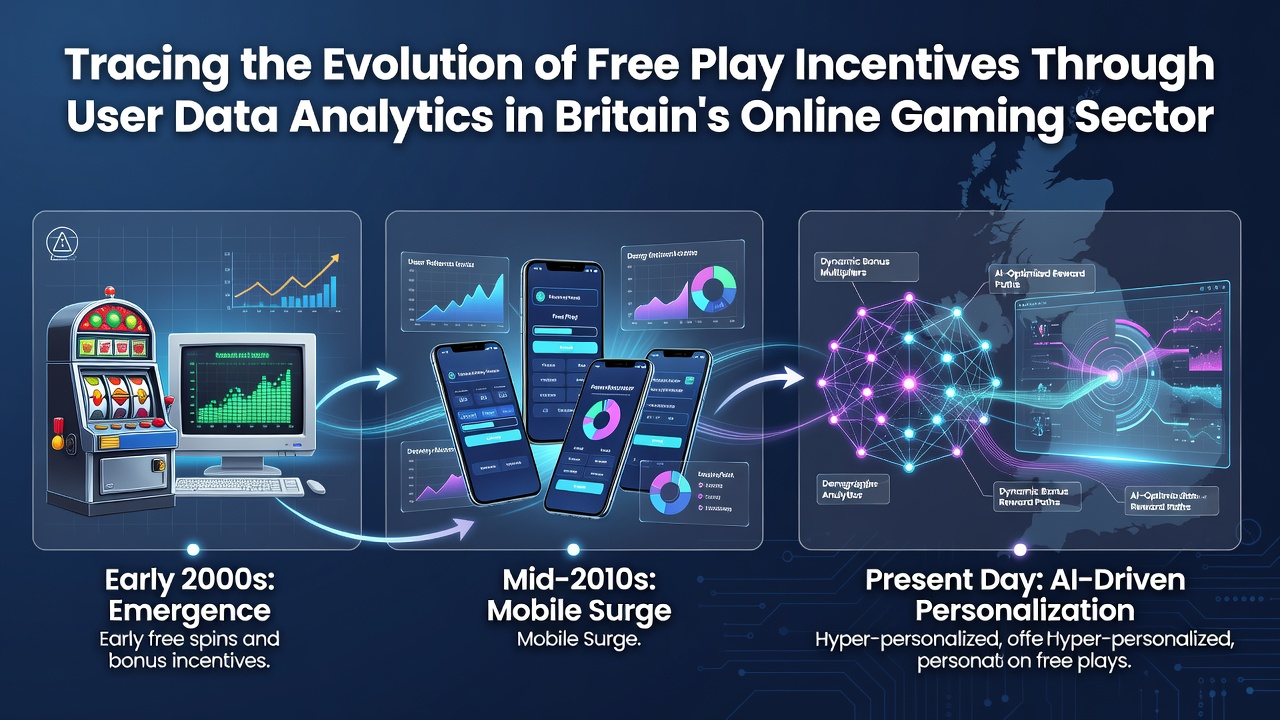
Free play incentives such as no-deposit spins and bonus credits have undergone measurable changes in Britain's online gaming sector since the early 2010s, with user data analytics serving as the primary driver behind those adjustments. Operators began collecting detailed player behavior metrics around 2012, and those datasets quickly revealed patterns in how participants interacted with initial rewards. By cross-referencing deposit frequency, session length, and game preference data, companies identified which incentive structures produced sustained engagement versus one-time use.
Early free play offers typically followed uniform templates distributed across player bases without segmentation. Analytics platforms introduced clustering techniques that grouped users according to risk tolerance, preferred volatility levels, and historical spend velocity. This segmentation allowed providers to tailor free spin quantities and qualifying game selections to specific cohorts, a shift documented in industry reports from organizations such as the Australian Institute of Criminology.
Early Data Collection Practices
Initial analytics efforts focused on basic metrics including click-through rates on promotional banners and redemption windows for credited spins. Operators noticed that players receiving forty free spins on high-volatility slots converted to deposits at higher rates than those assigned lower-volatility titles. These observations prompted iterative adjustments to game weighting within incentive packages, with changes rolled out across multiple sites by mid-2015.
Session heatmaps and time-of-day logging added further granularity. Data showed evening users responded better to immediate-use free credits while daytime participants preferred multi-day expiry windows. Refinements based on these findings spread through the sector within eighteen months, supported by third-party analytics vendors supplying standardized dashboards.
Integration of Predictive Modeling
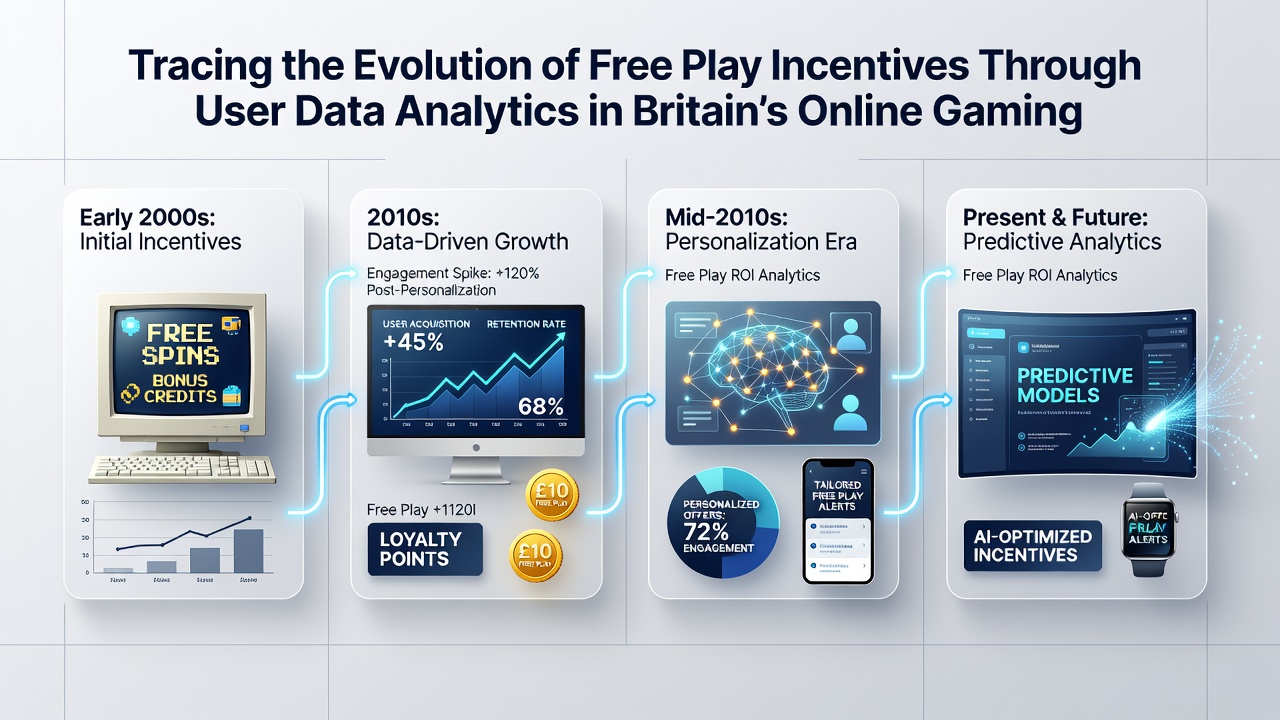
By 2018 predictive models entered wider use, drawing on historical datasets exceeding several million player records. Machine learning algorithms flagged likely churn points and triggered personalized free play top-ups before users disengaged. One study released by researchers at the University of Nevada, Reno, examined similar modeling applications in multiple jurisdictions and recorded retention lifts ranging from 12 to 19 percent when incentives aligned with predicted behavior curves.
July 2026 saw several British-facing platforms publish aggregated performance summaries indicating further refinement of these models. Real-time A/B testing frameworks now adjust free play parameters mid-campaign based on live engagement signals, reducing the interval between insight generation and offer modification from weeks to hours.
Regulatory and Compliance Data Layers
Analytics systems also incorporated compliance filters that track incentive usage against responsible gaming markers. Algorithms monitor rapid redemption sequences and flag patterns exceeding internal thresholds, prompting automatic cooling periods or adjusted offer values. European trade bodies including the European Gaming and Betting Association have referenced these layered monitoring approaches in sector-wide best practice documents circulated since 2021.
Cross-platform data sharing agreements, anonymized at source, enabled broader benchmarking. Operators compared conversion metrics for similar demographic slices and adopted successful structures from peer sites without exposing individual player identities. This collaborative layer accelerated the standardization of data-driven incentive design across Britain's licensed market.
Current Implementation Patterns
Today's free play structures frequently employ dynamic pricing models that recalculate reward values according to live player lifetime value scores. A user whose analytics profile shows consistent weekly deposits might receive higher denomination free spins on premium titles, whereas profiles indicating sporadic activity trigger smaller, more frequent credits designed to rebuild habit formation. These adjustments occur automatically through integrated customer relationship management platforms.
Geo-location and device fingerprinting add another dimension, allowing operators to align free play availability with regional preferences observed in historical datasets. Northern England cohorts, for instance, demonstrate stronger engagement with table game free credits compared with southern regions favoring slot-focused offers, patterns confirmed through repeated seasonal analysis.
Conclusion
The trajectory of free play incentives in Britain's online gaming sector demonstrates a clear progression from static, mass-distributed rewards toward individualized, data-optimized structures. Continued advances in real-time analytics and cross-jurisdictional benchmarking suggest further granularity will emerge as datasets expand. Observers tracking these developments note that the core mechanism remains consistent: player behavior signals directly inform incentive parameters, creating a feedback loop that refines offer design with each campaign cycle.